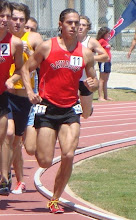
One of the more interesting aspects of parkour in Melbourne has been the opportunity to meet Alex Pava, who I met during my very first outdoor training session in Melbourne. Alex was initially introduced to me after Chippa heard about my research and basically said, “You’re going around the world “studying” parkour? Wait, we have a guy like that too!” Alex and I immediately had a lot to talk about, especially since we were both attempting to study the sport from the dual perspectives of “observer” and “practionner”, something that hasn’t been done much to date. While Alex’s primary focus is the Australian parkour movement, in a few days he will be starting on the first of his own international parkour travels to Canada, Russia, and France (his travel is broken up into separate segments since he’s a member of the “real world” and has a wife and house he can’t just leave for a year to go gallivanting around the world). One of the most interesting aspects of his research is that not only is he studying parkour, but he’s also a practionner. Similar to me, he’s found that this has allowed him to gain an additional level of insight into the sport.
Alex has extensive background as an artist/illustrator and he’s planning to integrate this into the degree, to (in his own words) “show how the comic (book) medium can be used as an ethnographic method of communicating social data, depicting space, movement and people.” The comics below are some of the most recent episodes of a weekly strip he publishes on the APA website; of which the entirety can be found HERE.
The subjects for the comics are often taken from the debate/conversations that occur on the APA website forum or from discussions during training sessions, and are designed to reflect some of the current issues in the sport and topics of interest to traceurs. Characters aren’t linked to specific personages in the parkour world, although elements have been taken from prominent figures in the sport, or in the APA community. Reading through the strips gives a pretty good idea of some of the discussions going on at the moment in the Australian parkour scene, and of some people’s perspective on recent events in Europe (the increased commercialization of the sport, freerunning vs. parkour, what traceurs get from training…)
Since I’m sure that there are a number of questions about how Alex is getting a “doctorate in parkour”, I asked him to send me some more specifics about the degree:
Aims: The primary aim of this project is to gain insight into the current organizational, philosophical and practical principles of the Australian Parkour movement. This will eventually be used as contrast to global movements, as observed through travel in second year. The secondary aim is to demonstrate the potential the comic (book) medium as an ethnographic method of communicating social data, depicting space, movement and people.
Participants: The participants of this study will be the people who are involved in the Parkour movement as instructors, commentators and practitioners. Most practitioners practice in groups that are united by common philosophical and practical principles. Particular attention will be given to describing various Parkour communities. These vary from highly structured collectives with committees, training facilities and insurance to loose and informal training groups that espouse a distinctive local variant of global parkour philosophies. Participants cover a wide spectrum of age and ethnicity and include both genders. This research will be focused on participants over the age of 18.
Brief Description: This study will be ethnographic and will be conducted through a combination of participant-observation methodologies as well as informal interviews. Online resources and existing academic literature will be used to gain an additional perspective on the international development of Parkour. This will be contrasted against my observation of the Australian, and global, practice of the discipline. Data will be gathered through note-taking, photography and visual notes (sketches).
Methods of Data Analysis: Methods will be primarily qualitative. Written notes, photographs, sketches/illustrations and third-party articles will be collected. This information will be codified and analysed in accordance to relevant themes and standard ethnographic structures.
Showing posts with label APA. Show all posts
Tuesday, January 18, 2011
Friday, December 31, 2010
Beyond Basics Classes – “Reach, Escape”
The outdoor classes are split into 3 different groups, “First Timers”, “Basics”, and “Beyond Basics”. I can only speak for my experience in the “Beyond Basics” group, but I was pretty impressed with the classes. Usually taught by Chippa, the current president of the APA and one of the longest practicing traceurs in Australia, these classes are very different from anything that I’ve ever experienced. While the warm-up usually consisted of a run to a certain destination, nothing was impossible after that. I found this out the hard way on the first day as our run diverted after a few hundred meters to include a climb up a wall that wouldn’t have been my first choice of climbs had I been on my own. This wasn’t helped by the fact that I had my laptop in my backpack, but despite that, I made it. One of Chippa’s main goals with the Beyond Basics class, and with the APA in general is to encourage people to practice “useful parkour”. This is evident in all aspects of APA classes, especially the Beyond Basics ones, which essentially teach to the motto of the APA, “Reach, Escape”.
My second Beyond Basics class was probably one of my favorite classes ever. After a warm-up run that included climbing over various buildings and attempting some basic movements like “kong-to-cat”, aka “cat leap to arm jump”, we headed up to the huge park that borders the Melbourne Botanical Gardens. There we talked for a bit about the “useful” aspects of parkour before Chippa introduced us to the main activity of the day. The “escape scenario”. The rules were simple: one person is the pursuer, the other person is the pursued. The goal of the pursued is to keep away from the pursuer, by whatever means possible, until the pursuer is too exhausted to continue. The pursuer on the other hand has the task of catching, and subduing (not usually gently) the pursued. While it may sound a bit Spartan and brutal, this exercise does a great job of imitating a real-world situation of being chased.
The first round I was the pursuer and knowing that my “victim” probably didn’t have the same endurance as I did I decided to play to my strengths and use the wolf technique of tiring him out before striking. This was decision was reached partly because I knew my endurance was pretty good, and partly because the guy that I would be chasing looked like he would definitely have kicked my butt if it came to wrestling. My technique paid off and his initial burst of energy out of the blocks soon gave way to dodging and zig-zags that I was able to follow at an easy lope, cutting corners and staying about 10 meters behind the whole time. After about a minute of running full steam and zigzagging all over the place he was sufficiently tired out for me to take him down in a diving tackle (I was pretty pleased with this, especially given my lack of rugby/American football experience).
For the next round we switched roles and again I decided to defer to my strengths. After a surge out of the blocks to get some distance I ran the guy around the park for about 5 minutes, using just enough energy to stay 20 meters ahead, which let me dictate which way we ran. Since we’d initially come up to the park by a hill, I led the guy up and down the hill before I put in a surge that pretty much broke the pursuit. The next two rounds went pretty much the same as the first two, and by then the other guy was absolutely exhausted.
The last round really put things in perspective for me because I was chasing Chippa. He’d been watching my technique and right at the start he jetted off with me right behind. I thought that I would be able to use the technique on him that I’d used before, but about 50 meters into the exercise he vaulted over a low wall and dropped out of view into the botanical gardens. After a moment of hesitation I followed him, much more slowly and cautiously, and emerged from the gardens to find him across a hill about 200 meters away, catching his breath and looking warily across the hill. Using the cover of the trees I was able to sneak up close enough to catch him by surprise. After a brief flight I managed to run him down on the open ground. The exercise did a great job of showing me my strengths and weakness. It was obvious that on open ground my distance running experience gave me a distinct advantage, but the moment it came to unknown territory and foreign obstacles I lost this advantage. I’ve often wondered what a real chase scenario would be like for me, since I know that I would almost undoubtedly revert to my instinctual running technique. But what if there isn’t any space to run? Definitely something that made me think and really shows the more “useful” aspects of parkour.
The whole “Reach, Escape” philosophy is one that really appeals to me. For a while now I’ve been struggling to explain to others, and myself, the usefulness of this sport that I’m practicing. The vague explanations of personal fitness, connecting with my inner child, and being “useful” usually fall short, and I end up feeling like I’ve done an inadequate job explaining. The “Reach, Escape” philosophy gives a specific reason for the training, to be able to use the skills that we train in order to escape a dangerous situation, or to reach a certain destination, whether it’s to help someone in need, or to get back into the house when your friend has locked themselves out. The “Reach, Escape” philosophy comes primarily from the philosophy of David Belle, who had a very strong desire “d’être fort pour être utile” (be strong to be useful), an ideal inspired and taught by his father, Raymond Belle. Short and sweet, I feel that “Reach, Escape” can be interpreted in a variety of different ways, and is one of the simplest, yet most encompassing explanations that I’ve encountered so far.
My second Beyond Basics class was probably one of my favorite classes ever. After a warm-up run that included climbing over various buildings and attempting some basic movements like “kong-to-cat”, aka “cat leap to arm jump”, we headed up to the huge park that borders the Melbourne Botanical Gardens. There we talked for a bit about the “useful” aspects of parkour before Chippa introduced us to the main activity of the day. The “escape scenario”. The rules were simple: one person is the pursuer, the other person is the pursued. The goal of the pursued is to keep away from the pursuer, by whatever means possible, until the pursuer is too exhausted to continue. The pursuer on the other hand has the task of catching, and subduing (not usually gently) the pursued. While it may sound a bit Spartan and brutal, this exercise does a great job of imitating a real-world situation of being chased.
The first round I was the pursuer and knowing that my “victim” probably didn’t have the same endurance as I did I decided to play to my strengths and use the wolf technique of tiring him out before striking. This was decision was reached partly because I knew my endurance was pretty good, and partly because the guy that I would be chasing looked like he would definitely have kicked my butt if it came to wrestling. My technique paid off and his initial burst of energy out of the blocks soon gave way to dodging and zig-zags that I was able to follow at an easy lope, cutting corners and staying about 10 meters behind the whole time. After about a minute of running full steam and zigzagging all over the place he was sufficiently tired out for me to take him down in a diving tackle (I was pretty pleased with this, especially given my lack of rugby/American football experience).
For the next round we switched roles and again I decided to defer to my strengths. After a surge out of the blocks to get some distance I ran the guy around the park for about 5 minutes, using just enough energy to stay 20 meters ahead, which let me dictate which way we ran. Since we’d initially come up to the park by a hill, I led the guy up and down the hill before I put in a surge that pretty much broke the pursuit. The next two rounds went pretty much the same as the first two, and by then the other guy was absolutely exhausted.
The last round really put things in perspective for me because I was chasing Chippa. He’d been watching my technique and right at the start he jetted off with me right behind. I thought that I would be able to use the technique on him that I’d used before, but about 50 meters into the exercise he vaulted over a low wall and dropped out of view into the botanical gardens. After a moment of hesitation I followed him, much more slowly and cautiously, and emerged from the gardens to find him across a hill about 200 meters away, catching his breath and looking warily across the hill. Using the cover of the trees I was able to sneak up close enough to catch him by surprise. After a brief flight I managed to run him down on the open ground. The exercise did a great job of showing me my strengths and weakness. It was obvious that on open ground my distance running experience gave me a distinct advantage, but the moment it came to unknown territory and foreign obstacles I lost this advantage. I’ve often wondered what a real chase scenario would be like for me, since I know that I would almost undoubtedly revert to my instinctual running technique. But what if there isn’t any space to run? Definitely something that made me think and really shows the more “useful” aspects of parkour.
The whole “Reach, Escape” philosophy is one that really appeals to me. For a while now I’ve been struggling to explain to others, and myself, the usefulness of this sport that I’m practicing. The vague explanations of personal fitness, connecting with my inner child, and being “useful” usually fall short, and I end up feeling like I’ve done an inadequate job explaining. The “Reach, Escape” philosophy gives a specific reason for the training, to be able to use the skills that we train in order to escape a dangerous situation, or to reach a certain destination, whether it’s to help someone in need, or to get back into the house when your friend has locked themselves out. The “Reach, Escape” philosophy comes primarily from the philosophy of David Belle, who had a very strong desire “d’être fort pour être utile” (be strong to be useful), an ideal inspired and taught by his father, Raymond Belle. Short and sweet, I feel that “Reach, Escape” can be interpreted in a variety of different ways, and is one of the simplest, yet most encompassing explanations that I’ve encountered so far.
Parkour with the APA in Melbourne
And now for the important part. The parkour in Melbourne.
My first introduction to parkour in Melbourne was a class that was held at the Trace Facility two days after my arrival. While the journey to the Trace Facility from the city is slightly sketchy, especially when done in the semi darkness, the facility is probably one of the best indoor parkour training facilities that I’ve encountered or seen in pictures. In addition to this, it also serves as the unofficial headquarters of the Australian Parkour Association (APA).
The facility is housed in a converted auto garage that has been meticulously planned out by its owners, who were some of the first people to start training for parkour in Australia. Below are some pictures and videos of the facility, although they definitely don’t do full justice to it.
From what I’ve seen and heard, the Melbourne chapter of the APA is by far the most advanced of the APA cities in terms of the classes that they offer and the jobs that they do. After observing the workings of the group over the past month and a half, I’d have to attribute a lot of that success to the experience and guidance of the leadership that has developed in Melbourne.
While the there aren’t quite as many classes offered here as with Parkour Generations in London, it’s still a pretty impressive schedule, especially given the very small number of instructors that are responsible for teaching all of the classes available (for more details, check out the APA website for Melbourne here).
Something that has become increasingly apparent to me over the past 6 months is that any parkour organization that wants to do any sort of significant teaching is limited by how many experienced and effective instructors that it has. Not only are insurance policies dependent on the ratios of students to instructors, but the constant grind of teaching, and normal life changes can result in a high rate of attrition. The need to keep instructors “fresh” and motivated is just as important as ensuring that there is a well-established source for the development of new instructors to cope with the expansion and change-over than occurs naturally.
Indoor Classes
The indoor classes at the Trace facility start off similar in many ways to the ones that I experienced with Parkour Generations. Most of the warm-up exercises were very similar, if not identical, to the ones that we did in London and it gave me a somewhat surreal feeling of déjà vu- same exercises, different accent, other side of the globe. While the warm-up wasn’t nearly as conditioning-intensive as some of Forrest’s (co-founder of Parkour Generations and infamous for his conditioning exercises), they got my muscles and joints ready for the rest of the training session. The rest of the class was spent working on various movements and routes, with a brief conditioning and stretching session at the end. Since the facility was much more suitable for parkour than any of the ones that I’d been to in London (not as many padded or cushy obstacles as the Westminster or Moberley sites, and a lot more stuff to work with than the Optimal Life Fitness site), the instructors were able to focus more on forming routes that mimicked an outdoor environment, both in the realness of the surfaces (hard walls, sharp corners, and unforgiving floors), and in the employment of the “fear” element. Like the classes in London, the indoor class included traceurs of a wide range of skill levels and the instructors did a good job of separating the groups so that the less experienced or less skilled members weren’t intimidated or dominated by the more experienced guys. All in all, I was pretty impressed with the indoor classes and especially with the facility. Another nice thing about having the facility “within the family” (owned by traceurs that are training) is that it can be opened to host “open sessions” in which traceurs can come by and train at their own pace at certain times throughout the week, usually on Friday and Saturday afternoons.
Outdoor Classes
The only outdoor classes officially hosted by the APA are on Sunday mornings in the center of Melbourne. While there is only one outdoor class per week, it’s pretty hard to compare it to any of the indoor classes for a number of reasons. The first difference is the size of the group. While indoor classes can range from 4 to 20+ people, the outdoor classes routinely have between 50 and 90 people participating. Every time I arrived at the “Waves” sculpture that served as the meeting place for the class I was shocked by the sheer number of people that had come out. In fact, the APA recently made the decision to have a “summer break” for the outdoor classes from early December to early February because due to the schools being in summer vacation they were getting too many people (120+) participating in the classes on Sundays and didn’t have enough instructors to safely lead the groups.
The classes start with a few announcements and the instructors issuing wristbands to all participants. The wristbands are a nice touch that the APA does partly for insurance reasons, and partly for common sense. The wristbands allow them to keep track of the number of participants, and ward off the spectators that often try to join in mid-session. The names and emergency contact details of the participant also fulfill certain insurance policy obligations while provide valuable information in an emergency situation.
After having everyone sign in and put their emergency contact details on a wristband, the group was divided into three classes. The “First Timers” class is mandatory for newcomers to APA classes, and like the indoor version, covers the basic movements and also a lot of the safety information. While it’s not the most action packed class, it works well for the APA because it ensures that everyone is on the same page for the classes and understands when the instructor tells them to do a “precision jump to the rail then a cat leap over the wall followed by a forward roll upon landing”.
The “Basics” class is probably the largest group and is made up of all different levels of experience and backgrounds. It’s usually the largest group and the goal is provide people with a working understanding of parkour and the various movements. The “Beyond Basics” class is reserved for the more experienced traceurs that can pass the “entry requirements” (See below) and the classes that I attended focused on doing things that teach traceurs to the see the “bigger picture” of how parkour can be applied in their environment while providing a pretty tough workout and conditioning session.
The entry requirements to participate in the Beyond Basics class*:
•Do a climb-up from a dead hang without using your elbows
•Run 2km in under 10 minutes
•Roll on concrete
•Speed Vault
•Dash Vault
•Lazy Vault
•Turn Vault
•Cat Pass
•Precision
•Arm Jump
•Wall run
•Tic Tac
•Forward and Reverse Underbar
*taken directly from the APA website
These entry requirements ensure that the progress of the group isn’t hampered by people lagging behind and also creates a sense of semi-elitist camaraderie among the group that often leads to additional training sessions outside of classes. After 4 months of training with Parkour Generations I was able to jump into the “Beyond Basics” and will elaborate more on that experience in the next post.
After the 2-hour class each of the groups meets back at the Waves sculpture to stretch and cool down. The instructors hold a meeting amongst themselves to debrief on their respective classes and to critique each other’s performances. I found this practice to be a really good way to develop good instructors and also to make sure that the goals and ideals of the APA were maintained. It also served as a venue for the instructors to learn and critique each other and for the more experienced guys to share their expertise and wisdom.
Instructor Training
There is also a free “Instructor Training” class is held in the early afternoon on Sundays before the main classes. Usually led by Chippa, this class is geared toward developing the next generation of instructors for the APA, something that might not sound too useful, but is in fact one of the main reasons for the APA’s success in Melbourne, since there are a lot more qualified and motivated instructors here than elsewhere in Australia. While not as “standardized” as the ADAPT course that I did in London, the Instructor Training has been a great way to develop my teaching skills and pick up tips on leading classes. One of the good things about the course is that it meets weekly, which allows for time to digest and think about things instead of having to “cram” during an intense 5-day course like ADAPT. The APA also hosts a more official and intensive “Instructor Training Course” in early February that is rumored to be similar of similar intensity to the ADAPT course but unfortunately I’ll be gone by then so I’ll just have to come back to Melbourne another year to experience that.
General Observations
It took me a while to put a finger on the reason, but from the moment that I started training with the APA I was aware that there was a different maturity level here. It wasn’t until Fizz (who is also in Melbourne for the start of her own “around the world adventure”- see October post for SOTF race for a pic), commented on the fact that there weren’t many people our age here that I realized that the age level here was very different than the one that I had become accustomed to in London. While I suspect that this has a lot to do with the fact that the classes that I attended in London were reserved for adults and the younger generations had their own classes, all of the gatherings and jams that I’ve been to here seem to have a more youthful and playful vibe. While it’s definitely been fun hanging out with high schoolers (who have some really high levels of parkour by the way), it’s also left me feeling slightly “old” at times. I’ve found that the main differences are in the energy levels and humor genres of the group. Practical jokes are common, and spontaneous wrestling and matches erupt frequently among the group whenever they aren’t training. I strongly suspect that this attitude comes partly from some of the veteran guys, who have serious and organized fronts that mask a very playful and mischievous side. This can be seen in all sorts of the activities that go on before, during, and after training sessions, but might be summed up best by some of the following videos and images.
My introduction to the game “British Bulldog”, best described as a full contact version of sharks and minnows. While not normally played as violently as in this clip, we were pretty pumped up on endorphins from a hard training session…
Video to come when I get a faster internet connection
After the last outdoor class before the summer break someone started the “sculpture climbing” challenge involving the giant “Waves” sculpture.
Some of the videos made by Travis, a traceur that could easily be mistaken for 18 or 19 if it wasn’t for the fact that he’s 16…
Video to come when I get a proper video connection
Another thing that has struck me about the APA activities in Melbourne is the lack of females training. Of course there are the usual girlfriends and groupies that seem to accompany any sort of parkour group (the parkour lifestyle usually leads to a pretty high proportion of 6-packs), but unlike London, where a lot of these women trained as well; the classes here have been noticeably lacking in estrogen. While this may be a good thing given the number of high school guys hanging around, I was still surprised to find this and it definitely creates a much more macho/testosterone-laden dynamic, that while usually helpful with training, is one that I haven’t had much of since running track.
I’ve actually been pretty surprised in general to see a distinct lack of emphasis on female sports in general in Australia. I’d assumed that it would be like the US or UK where, although women’s events are often not as well attended or popular as men’s sporting events, female athletes were still a relatively common sight and are well respected. However, I’ve been continually surprised by the unequal ratio of male to female joggers on the banks of the Yarra, of women walking around in workout attire, or of women’s professional or amateur sports in general. I suspect that the fact that the APA doesn’t have any female instructors might have something to do with it, but after talking with a number of women in London, France, and now Australia, the lack of a “Women’s Only” class might be even more important. While I don’t want to attempt to address the whole “Women in Parkour” issue in this post because it merits a lot more discussion than I’m prepared to write at the moment, the “Women’s Only Class” is steadily becoming a topic of particular interest to me. Is that really the best way to encourage more female involvement? Is there a more effective and inclusive way? Does it have a positive long term effect or does it create a false impression of the global “co-ed” parkour scene?
Another thing that has been interesting to observe here is the apparent disconnect that exists between Europe and Australia on certain aspects of the history of parkour. While I’ve found that the YouTube videos that traceurs watch are pretty much the same around the world, there are a number of elements of the “Founding of parkour” story that are different here, or are left out in general. Like I found when talking to traceurs in the USA, the Yamakasi are relatively unknown compared to David Belle and Sébastien Foucan, and a lot of the recent efforts to reunite Freerunning, ADD, and Parkour are only just now making their way to Australia, where the classic “freerunning vs. parkour” battle is in full pitch. Personally I think that this is similar to the fact that many Europeans and Americans take little interest in the happenings and geography of Oceania, and likewise a lot of the traceurs here don’t care too much about the “parkour politics” going on in Europe. That being said, there are a number of people that are VERY well informed on the state of the sport on a global scale, as I found out my first day of training in Melbourne when I met someone studying for a “doctorate in parkour” (more on this in an upcoming post).
All in all, the past month and a half in Melbourne has been a lot of fun and I’ve found that my parkour is improving steadily as I learn to combine ideas and techniques from the plethora of “mentors” and models that I’ve had. The more I travel the more I realize that these places I’m visiting each have their own “flavor” of parkour and that each brings a new perspective to a sport that is still in the adolescent stages of forming itself and determining what it wants to be when it grows up (sounds familiar…).
My first introduction to parkour in Melbourne was a class that was held at the Trace Facility two days after my arrival. While the journey to the Trace Facility from the city is slightly sketchy, especially when done in the semi darkness, the facility is probably one of the best indoor parkour training facilities that I’ve encountered or seen in pictures. In addition to this, it also serves as the unofficial headquarters of the Australian Parkour Association (APA).
The facility is housed in a converted auto garage that has been meticulously planned out by its owners, who were some of the first people to start training for parkour in Australia. Below are some pictures and videos of the facility, although they definitely don’t do full justice to it.
| The inside of the Trace facility with a great view of the scaffolding that is currently in place. (That's me in the yellow doing my 101 muscle-ups). Photo courtesy of "The Fist" Photography. |
| A traceur going from the scaffolding to "the wall". Photo courtesy of "The Fist" Photography. |
From what I’ve seen and heard, the Melbourne chapter of the APA is by far the most advanced of the APA cities in terms of the classes that they offer and the jobs that they do. After observing the workings of the group over the past month and a half, I’d have to attribute a lot of that success to the experience and guidance of the leadership that has developed in Melbourne.
While the there aren’t quite as many classes offered here as with Parkour Generations in London, it’s still a pretty impressive schedule, especially given the very small number of instructors that are responsible for teaching all of the classes available (for more details, check out the APA website for Melbourne here).
Something that has become increasingly apparent to me over the past 6 months is that any parkour organization that wants to do any sort of significant teaching is limited by how many experienced and effective instructors that it has. Not only are insurance policies dependent on the ratios of students to instructors, but the constant grind of teaching, and normal life changes can result in a high rate of attrition. The need to keep instructors “fresh” and motivated is just as important as ensuring that there is a well-established source for the development of new instructors to cope with the expansion and change-over than occurs naturally.
Indoor Classes
The indoor classes at the Trace facility start off similar in many ways to the ones that I experienced with Parkour Generations. Most of the warm-up exercises were very similar, if not identical, to the ones that we did in London and it gave me a somewhat surreal feeling of déjà vu- same exercises, different accent, other side of the globe. While the warm-up wasn’t nearly as conditioning-intensive as some of Forrest’s (co-founder of Parkour Generations and infamous for his conditioning exercises), they got my muscles and joints ready for the rest of the training session. The rest of the class was spent working on various movements and routes, with a brief conditioning and stretching session at the end. Since the facility was much more suitable for parkour than any of the ones that I’d been to in London (not as many padded or cushy obstacles as the Westminster or Moberley sites, and a lot more stuff to work with than the Optimal Life Fitness site), the instructors were able to focus more on forming routes that mimicked an outdoor environment, both in the realness of the surfaces (hard walls, sharp corners, and unforgiving floors), and in the employment of the “fear” element. Like the classes in London, the indoor class included traceurs of a wide range of skill levels and the instructors did a good job of separating the groups so that the less experienced or less skilled members weren’t intimidated or dominated by the more experienced guys. All in all, I was pretty impressed with the indoor classes and especially with the facility. Another nice thing about having the facility “within the family” (owned by traceurs that are training) is that it can be opened to host “open sessions” in which traceurs can come by and train at their own pace at certain times throughout the week, usually on Friday and Saturday afternoons.
Outdoor Classes
The only outdoor classes officially hosted by the APA are on Sunday mornings in the center of Melbourne. While there is only one outdoor class per week, it’s pretty hard to compare it to any of the indoor classes for a number of reasons. The first difference is the size of the group. While indoor classes can range from 4 to 20+ people, the outdoor classes routinely have between 50 and 90 people participating. Every time I arrived at the “Waves” sculpture that served as the meeting place for the class I was shocked by the sheer number of people that had come out. In fact, the APA recently made the decision to have a “summer break” for the outdoor classes from early December to early February because due to the schools being in summer vacation they were getting too many people (120+) participating in the classes on Sundays and didn’t have enough instructors to safely lead the groups.
The classes start with a few announcements and the instructors issuing wristbands to all participants. The wristbands are a nice touch that the APA does partly for insurance reasons, and partly for common sense. The wristbands allow them to keep track of the number of participants, and ward off the spectators that often try to join in mid-session. The names and emergency contact details of the participant also fulfill certain insurance policy obligations while provide valuable information in an emergency situation.
After having everyone sign in and put their emergency contact details on a wristband, the group was divided into three classes. The “First Timers” class is mandatory for newcomers to APA classes, and like the indoor version, covers the basic movements and also a lot of the safety information. While it’s not the most action packed class, it works well for the APA because it ensures that everyone is on the same page for the classes and understands when the instructor tells them to do a “precision jump to the rail then a cat leap over the wall followed by a forward roll upon landing”.
The “Basics” class is probably the largest group and is made up of all different levels of experience and backgrounds. It’s usually the largest group and the goal is provide people with a working understanding of parkour and the various movements. The “Beyond Basics” class is reserved for the more experienced traceurs that can pass the “entry requirements” (See below) and the classes that I attended focused on doing things that teach traceurs to the see the “bigger picture” of how parkour can be applied in their environment while providing a pretty tough workout and conditioning session.
The entry requirements to participate in the Beyond Basics class*:
•Do a climb-up from a dead hang without using your elbows
•Run 2km in under 10 minutes
•Roll on concrete
•Speed Vault
•Dash Vault
•Lazy Vault
•Turn Vault
•Cat Pass
•Precision
•Arm Jump
•Wall run
•Tic Tac
•Forward and Reverse Underbar
*taken directly from the APA website
These entry requirements ensure that the progress of the group isn’t hampered by people lagging behind and also creates a sense of semi-elitist camaraderie among the group that often leads to additional training sessions outside of classes. After 4 months of training with Parkour Generations I was able to jump into the “Beyond Basics” and will elaborate more on that experience in the next post.
After the 2-hour class each of the groups meets back at the Waves sculpture to stretch and cool down. The instructors hold a meeting amongst themselves to debrief on their respective classes and to critique each other’s performances. I found this practice to be a really good way to develop good instructors and also to make sure that the goals and ideals of the APA were maintained. It also served as a venue for the instructors to learn and critique each other and for the more experienced guys to share their expertise and wisdom.
Instructor Training
There is also a free “Instructor Training” class is held in the early afternoon on Sundays before the main classes. Usually led by Chippa, this class is geared toward developing the next generation of instructors for the APA, something that might not sound too useful, but is in fact one of the main reasons for the APA’s success in Melbourne, since there are a lot more qualified and motivated instructors here than elsewhere in Australia. While not as “standardized” as the ADAPT course that I did in London, the Instructor Training has been a great way to develop my teaching skills and pick up tips on leading classes. One of the good things about the course is that it meets weekly, which allows for time to digest and think about things instead of having to “cram” during an intense 5-day course like ADAPT. The APA also hosts a more official and intensive “Instructor Training Course” in early February that is rumored to be similar of similar intensity to the ADAPT course but unfortunately I’ll be gone by then so I’ll just have to come back to Melbourne another year to experience that.
General Observations
It took me a while to put a finger on the reason, but from the moment that I started training with the APA I was aware that there was a different maturity level here. It wasn’t until Fizz (who is also in Melbourne for the start of her own “around the world adventure”- see October post for SOTF race for a pic), commented on the fact that there weren’t many people our age here that I realized that the age level here was very different than the one that I had become accustomed to in London. While I suspect that this has a lot to do with the fact that the classes that I attended in London were reserved for adults and the younger generations had their own classes, all of the gatherings and jams that I’ve been to here seem to have a more youthful and playful vibe. While it’s definitely been fun hanging out with high schoolers (who have some really high levels of parkour by the way), it’s also left me feeling slightly “old” at times. I’ve found that the main differences are in the energy levels and humor genres of the group. Practical jokes are common, and spontaneous wrestling and matches erupt frequently among the group whenever they aren’t training. I strongly suspect that this attitude comes partly from some of the veteran guys, who have serious and organized fronts that mask a very playful and mischievous side. This can be seen in all sorts of the activities that go on before, during, and after training sessions, but might be summed up best by some of the following videos and images.
My introduction to the game “British Bulldog”, best described as a full contact version of sharks and minnows. While not normally played as violently as in this clip, we were pretty pumped up on endorphins from a hard training session…
Video to come when I get a faster internet connection
After the last outdoor class before the summer break someone started the “sculpture climbing” challenge involving the giant “Waves” sculpture.
![]() |
| What starts like this.... |
![]() |
| ... often escalates to this. Photos courtesy of "The Fist" Photography. |
Some of the videos made by Travis, a traceur that could easily be mistaken for 18 or 19 if it wasn’t for the fact that he’s 16…
![]() |
| Posing for the camera on top of the "Waves" sculpture. Photo courtesy of "The Fist" Photography. |
Video to come when I get a proper video connection
Another thing that has struck me about the APA activities in Melbourne is the lack of females training. Of course there are the usual girlfriends and groupies that seem to accompany any sort of parkour group (the parkour lifestyle usually leads to a pretty high proportion of 6-packs), but unlike London, where a lot of these women trained as well; the classes here have been noticeably lacking in estrogen. While this may be a good thing given the number of high school guys hanging around, I was still surprised to find this and it definitely creates a much more macho/testosterone-laden dynamic, that while usually helpful with training, is one that I haven’t had much of since running track.
I’ve actually been pretty surprised in general to see a distinct lack of emphasis on female sports in general in Australia. I’d assumed that it would be like the US or UK where, although women’s events are often not as well attended or popular as men’s sporting events, female athletes were still a relatively common sight and are well respected. However, I’ve been continually surprised by the unequal ratio of male to female joggers on the banks of the Yarra, of women walking around in workout attire, or of women’s professional or amateur sports in general. I suspect that the fact that the APA doesn’t have any female instructors might have something to do with it, but after talking with a number of women in London, France, and now Australia, the lack of a “Women’s Only” class might be even more important. While I don’t want to attempt to address the whole “Women in Parkour” issue in this post because it merits a lot more discussion than I’m prepared to write at the moment, the “Women’s Only Class” is steadily becoming a topic of particular interest to me. Is that really the best way to encourage more female involvement? Is there a more effective and inclusive way? Does it have a positive long term effect or does it create a false impression of the global “co-ed” parkour scene?
Another thing that has been interesting to observe here is the apparent disconnect that exists between Europe and Australia on certain aspects of the history of parkour. While I’ve found that the YouTube videos that traceurs watch are pretty much the same around the world, there are a number of elements of the “Founding of parkour” story that are different here, or are left out in general. Like I found when talking to traceurs in the USA, the Yamakasi are relatively unknown compared to David Belle and Sébastien Foucan, and a lot of the recent efforts to reunite Freerunning, ADD, and Parkour are only just now making their way to Australia, where the classic “freerunning vs. parkour” battle is in full pitch. Personally I think that this is similar to the fact that many Europeans and Americans take little interest in the happenings and geography of Oceania, and likewise a lot of the traceurs here don’t care too much about the “parkour politics” going on in Europe. That being said, there are a number of people that are VERY well informed on the state of the sport on a global scale, as I found out my first day of training in Melbourne when I met someone studying for a “doctorate in parkour” (more on this in an upcoming post).
All in all, the past month and a half in Melbourne has been a lot of fun and I’ve found that my parkour is improving steadily as I learn to combine ideas and techniques from the plethora of “mentors” and models that I’ve had. The more I travel the more I realize that these places I’m visiting each have their own “flavor” of parkour and that each brings a new perspective to a sport that is still in the adolescent stages of forming itself and determining what it wants to be when it grows up (sounds familiar…).
Monday, November 29, 2010
Sydney
Sydney seemed to pass by in a blur of jet lag with glimpses of sunshine. Due to my slight delay in arrival time I got there late on a Friday night, 26 hours after the hostel was expecting me. I waited in the rain for about 5 minutes before someone heard me knocking (apparently check-in was only available from 10-5pm, kind of surprising for a hostel.) After dropping off my bags I went out to find something to eat. The part of the city that I was in, Balmain, was not the gastronomic capital of the world, especially at midnight, and I had to settle for a sub-par kebab outside a local nightclub. After inhaling that, I went to sleep dreaming of the delicious fresh fruit that I had left behind in Singapore and wondering if I would ever be able to leave the rain behind.
I was woken at 3am by an arm on my leg on the top bunk. I looked down to see a face peering at me through drunken eyes. I kicked the arm off my bed and turned over to go back to sleep only to be awoken a few moments later by the afore-mentioned arm joined by the rest of its owner as they tried to get into my bed. I kicked both from my bed, which made the won’t-remember-anything-in-the-morning owner fall into another lodger’s bed. This person was even less receptive of visitors than I was and she started shouting at the guy, which after a moment of confusion sent him stumbling back to his own bed. I turned over and went back to sleep.
Around 6am was awoken by a shrill cry of “He pissed all over my clothes! WTF!”; followed by a not-quite-as-shrill “and he pissed on the new guy’s suitcase”. After looking down to see that it was indeed my suitcase that had acted as the backstop for the cabinet-shaped urinal, I decided that I couldn’t do anything about it at the moment and would probably react better when I had slept off the jet-lag. A few hours later I got up to assess the extent of the damage and see if anything needed to be cleaned. Luckily my suitcase is apparently piss-proof in addition to being hard to handle, and everything inside the suitcase seemed to be dry and urine-free.
After a shower I set out into the late morning to find something to eat and got a nice tour of downtown Balmain as well. While it was a lot more inviting during the day than at night, I found that things were just as ridiculously expensive as they had been the night before, and that my dreams of surviving on $10 a day were a bit ambitious. Upon my return to the hostel I made friends with some of my fellow lodgers, all German, and went into town to explore the harbor with them. We meandered by the wharves and the Opera house before stopping in the botanical gardens to hang out and play with the massive parrots that lived there. After we got bored there we stopped by the supermarket on the way home where my hopes of inexpensive living were further dashed. I spent the rest of the night in the hostel mingling with the residents as they participated in the internationally practiced hostel activity of getting drunk on the low-budget alcoholic option, in this case- street wine, aka box wine or pinard, or “goon” in Australia.
The next morning I packed up again and headed back to the center of town. I locked up my bags near the greyhound bus terminal and went off in search of the Sydney Parkour group which was supposed to be hosting classes and a jam that day. After getting a bit lost I managed to find them, and spent the rest of the day hanging out with the guys. I took part in the morning class so that I could see how the classes were structured down under, and discovered that although the accents and some of the movements were different, we all did the same sport. I also found that I was just as tight and out of shape as I had feared after not doing any serious training for almost a week. While the class was good and reasonably well-run, I realized just how much I had taken Parkour Generations for granted. One thing that Sydney did have on London was the weather though, since it had finally started to be warm and sunny again, and most of the training that day was done down by the harbor with a beautiful view and nice breeze.
After the class I stuck around and trained with some of the more experienced guys from the area that came down for the day. While the dress-code was markedly different (I’ll explain in another post) the attitude was pretty similar to the Sunday gatherings in London. One of the things that struck me most about parkour in Sydney was the prevalence of water as either an obstacle or a backdrop to a lot of the stuff. The wharf formed a great training spot for the guys and included a number of water jumps that I hadn’t seen before. Unfortunately I didn’t have my camera with me to document it, but there were a number of precision jumps from the new wharf to the decrepit bits of the old wooden wharf that were still standing. While the jumps ranged from about 7 to 15 feet, they all featured the 10 foot drop into the water below and lots of old wood. Something to try when I come back to Sydney. After giving me a quick tour of the wharf I went with some of the guys to meet the rest of the group, which was doing flips into the harbor from one of the lower docks. While I was initially surprised by the fact that someone would voluntarily jump into the harbor (Boston, London, or Paris aren’t exactly good places to swim in the harbor unless you want a 3rd eye or green skin), they guys assured me that apart from the jellyfish the harbor was fine to swim in. I hung around with them for the rest of the afternoon until it was time for me to head back to bus station.
This is a video that features some of the Australian guys, most notably Shaun Wood (long blond hair). I've included it since I don't have any pictures from my stay and one can get a glimpse of some of the training environments in Sydney. A bit different from London.... While I didn’t get to meet the majority of the guys in the video during my pass through Sydney I’m hoping to meet them at some point during my time in OZ since I keep hearing about them from people around the world.
For more information on Australian Parkour Association and the various classes offered in Sydney you can visit their site here.
12 hours on a Greyhound bus and one really horrible fried chicken sandwich later (it was that or candy for dinner, I probably should have chosen the latter), I was in Melbourne…
I was woken at 3am by an arm on my leg on the top bunk. I looked down to see a face peering at me through drunken eyes. I kicked the arm off my bed and turned over to go back to sleep only to be awoken a few moments later by the afore-mentioned arm joined by the rest of its owner as they tried to get into my bed. I kicked both from my bed, which made the won’t-remember-anything-in-the-morning owner fall into another lodger’s bed. This person was even less receptive of visitors than I was and she started shouting at the guy, which after a moment of confusion sent him stumbling back to his own bed. I turned over and went back to sleep.
Around 6am was awoken by a shrill cry of “He pissed all over my clothes! WTF!”; followed by a not-quite-as-shrill “and he pissed on the new guy’s suitcase”. After looking down to see that it was indeed my suitcase that had acted as the backstop for the cabinet-shaped urinal, I decided that I couldn’t do anything about it at the moment and would probably react better when I had slept off the jet-lag. A few hours later I got up to assess the extent of the damage and see if anything needed to be cleaned. Luckily my suitcase is apparently piss-proof in addition to being hard to handle, and everything inside the suitcase seemed to be dry and urine-free.
After a shower I set out into the late morning to find something to eat and got a nice tour of downtown Balmain as well. While it was a lot more inviting during the day than at night, I found that things were just as ridiculously expensive as they had been the night before, and that my dreams of surviving on $10 a day were a bit ambitious. Upon my return to the hostel I made friends with some of my fellow lodgers, all German, and went into town to explore the harbor with them. We meandered by the wharves and the Opera house before stopping in the botanical gardens to hang out and play with the massive parrots that lived there. After we got bored there we stopped by the supermarket on the way home where my hopes of inexpensive living were further dashed. I spent the rest of the night in the hostel mingling with the residents as they participated in the internationally practiced hostel activity of getting drunk on the low-budget alcoholic option, in this case- street wine, aka box wine or pinard, or “goon” in Australia.
The next morning I packed up again and headed back to the center of town. I locked up my bags near the greyhound bus terminal and went off in search of the Sydney Parkour group which was supposed to be hosting classes and a jam that day. After getting a bit lost I managed to find them, and spent the rest of the day hanging out with the guys. I took part in the morning class so that I could see how the classes were structured down under, and discovered that although the accents and some of the movements were different, we all did the same sport. I also found that I was just as tight and out of shape as I had feared after not doing any serious training for almost a week. While the class was good and reasonably well-run, I realized just how much I had taken Parkour Generations for granted. One thing that Sydney did have on London was the weather though, since it had finally started to be warm and sunny again, and most of the training that day was done down by the harbor with a beautiful view and nice breeze.
After the class I stuck around and trained with some of the more experienced guys from the area that came down for the day. While the dress-code was markedly different (I’ll explain in another post) the attitude was pretty similar to the Sunday gatherings in London. One of the things that struck me most about parkour in Sydney was the prevalence of water as either an obstacle or a backdrop to a lot of the stuff. The wharf formed a great training spot for the guys and included a number of water jumps that I hadn’t seen before. Unfortunately I didn’t have my camera with me to document it, but there were a number of precision jumps from the new wharf to the decrepit bits of the old wooden wharf that were still standing. While the jumps ranged from about 7 to 15 feet, they all featured the 10 foot drop into the water below and lots of old wood. Something to try when I come back to Sydney. After giving me a quick tour of the wharf I went with some of the guys to meet the rest of the group, which was doing flips into the harbor from one of the lower docks. While I was initially surprised by the fact that someone would voluntarily jump into the harbor (Boston, London, or Paris aren’t exactly good places to swim in the harbor unless you want a 3rd eye or green skin), they guys assured me that apart from the jellyfish the harbor was fine to swim in. I hung around with them for the rest of the afternoon until it was time for me to head back to bus station.
This is a video that features some of the Australian guys, most notably Shaun Wood (long blond hair). I've included it since I don't have any pictures from my stay and one can get a glimpse of some of the training environments in Sydney. A bit different from London.... While I didn’t get to meet the majority of the guys in the video during my pass through Sydney I’m hoping to meet them at some point during my time in OZ since I keep hearing about them from people around the world.
For more information on Australian Parkour Association and the various classes offered in Sydney you can visit their site here.
12 hours on a Greyhound bus and one really horrible fried chicken sandwich later (it was that or candy for dinner, I probably should have chosen the latter), I was in Melbourne…
Subscribe to:
Posts (Atom)